

For skilled nursing & senior living operators
Senior care looks different
from inside the building.
Our perspective is informed by nursing-home administration, facility leadership, and corporate senior-care experience. We begin with how the operation actually works, then consider what the insurance needs to do.
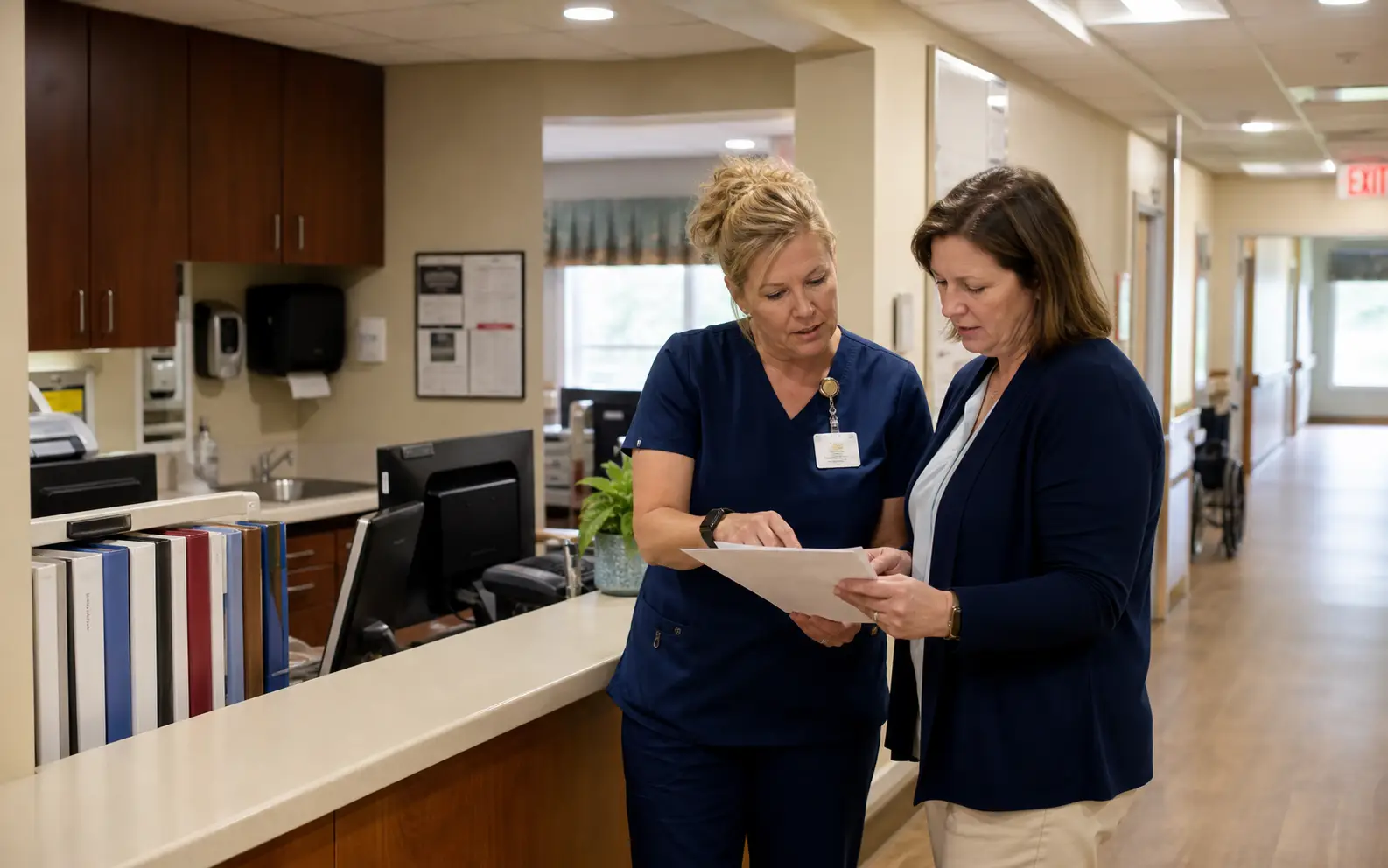
Experience inside senior care
Our senior-care experience started inside the buildings.
Our family spent years in nursing home administration, and our team's experience includes facility leadership and corporate work in senior care.
That background shapes how we approach insurance. We understand that staffing, census, surveys, documentation, resident care, property, and technology are operating realities before an insurer ever asks about them.
Senior care was part of our family long before it became part of our insurance work.
Who we serve
Who do we advise in senior care?
We advise independent owner-operators, substantial single facilities, regional groups, and complex multi-site organizations across Oklahoma. The fit is defined by the operation and the quality of the conversation, not by an arbitrary ceiling on locations or beds.
- SNF
Skilled nursing facilities
Professional and general liability is especially demanding here, shaped by survey history, staffing, acuity, loss development, and around-the-clock clinical operations.
- ALF
Assisted living communities
Liability exposure that changes as resident acuity rises, making the actual care profile more important than the license category alone.
- MC
Memory care communities
Elopement, supervision, abuse allegations, and the staffing and documentation practices that determine how an incident can be defended.
- MS
Multi-site operators
Coverage has to work across the organization while accounting for each location’s loss history, ownership entities, services, and operating differences.
Five connected areas
How do we organize the insurance review?
We organize the review around five connected areas rather than treating each policy as an isolated purchase. This makes the connections among resident care, employment, property, technology, and governance visible before an incident tests them.
- 01
Governance and regulatory response
Survey history, plans of correction, incident reporting, ownership changes, contracts, litigation trends, and documented oversight.
- 02
Resident care and professional liability
Acuity, assessment, documentation, medication management, falls, wounds, elopement, abuse allegations, and the procedures surrounding each.
- 03
Workforce and employment
Staffing models, agency personnel, turnover, training, workers compensation, employment practices, and the operational effect of vacancies.
- 04
Property and continuity
Buildings, equipment, utilities, emergency power, evacuation, food service, transportation, and the time required to restore operations.
- 05
Technology and vendor access
EHR downtime in a 24/7 clinical environment, protected health information, cyber response, and access shared with pharmacy, therapy, billing, and other vendors.
How we advise
How does a senior care insurance review work?
We begin by understanding the operation and the insurance in place today. Then we compare the real options, explain the tradeoffs, document the decisions, and put the next renewal’s work on a practical calendar instead of disappearing until a quote is due.
- Phase 01
Understand the operation
Current coverage, loss history, locations, services, ownership, staffing, vendors, controls, and the issues leadership already has on its radar.
- Phase 02
Compare the real options
Limits, retentions, exclusions, carrier roles, coverage handoffs, contractual requirements, and the practical tradeoffs among the available choices.
- Phase 03
Choose and prepare for renewal
A documented decision, open-item list, scheduled check-ins, and a clear calendar for the work that needs to happen before renewal.
Questions from senior care operators
Is this only for large nursing-home chains?
No. We work with independent owner-operators, substantial single facilities, regional groups, and complex multi-site organizations. The right fit is an operator that wants its clinical, staffing, property, technology, and regulatory story understood and represented clearly, not a particular number of facilities or beds.
What information helps us begin a senior care review?
We usually begin with current policies, loss history, location schedules, licensed beds, occupancy, services, staffing, payroll, revenue, survey history, ownership, emergency plans, and major vendor relationships. We use that first look to identify what matters next, then ask for more only where it will help the review.
Why should claims and operations be reviewed together?
Claims patterns can reveal more than an insurance-pricing problem. They may point to documentation gaps, training needs, recurring facility conditions, vendor issues, or inconsistent practices across locations. Connecting claim history to operations helps distinguish an isolated event from a pattern that deserves a broader response.
Is it too early to talk if renewal is still months away?
No. The review can begin at any point in the year. Starting at least 120 days before renewal gives us time to verify loss data, clear up missing information, help insurers understand how the operation runs, and solve difficult issues before renewal becomes a rushed quote exercise.
Start with the insurance you have today.
We can begin with the current policies, loss runs, and a practical picture of the organization. The first objective is understanding what needs attention next.