

Recreational insurance
Coverage for the weekends
you worked hard to enjoy
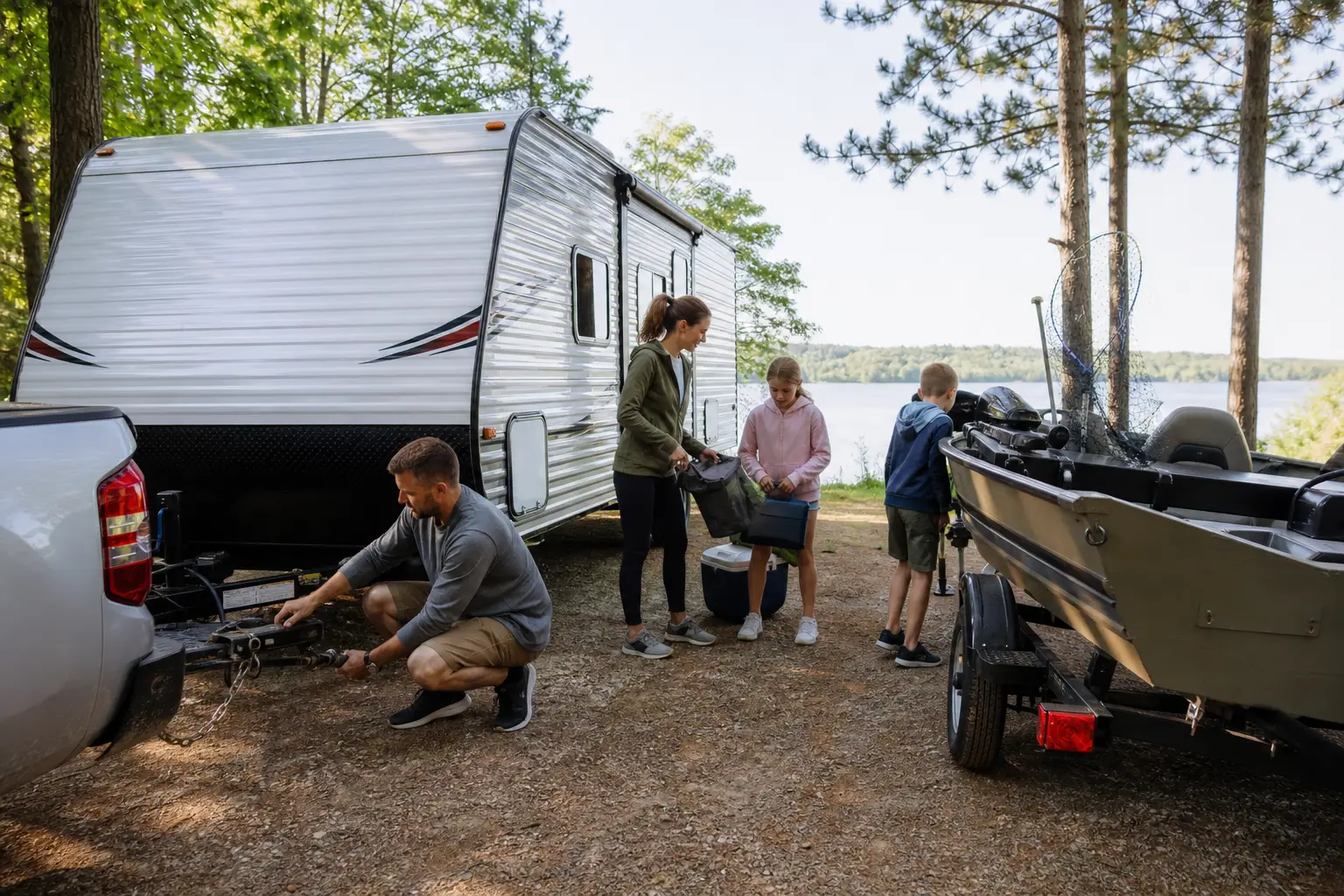
Boats, RVs, motorcycles, ATVs, trailers, and collector vehicles each bring their own version of the same question: what would it take to put the weekend back together?
Choose what you own
Start with your kind of weekend
Each one lives differently, travels differently, and needs its own conversation. Choose a category to see what matters for yours.
- Boat insurance
Pontoons, fishing boats, wake boats, and the trailers that get them to the lake.
Explore - Motorcycle insurance
Cruisers, touring bikes, street bikes, and the miles you look forward to riding.
Explore - RV insurance
Travel trailers, fifth wheels, and motorhomes that become home for the weekend.
Explore - ATV insurance
ATVs and side-by-sides used on your land, at the trails, or wherever Saturday takes you.
Explore
What it can cover
More than the vehicle itself
Recreational policies can protect the vehicle, the people using it, the equipment attached to it, and the liability that travels with it. The exact parts change by vehicle type, so the first step is understanding what you own and how you use it.
- 01
Liability
Helps protect you when operating the boat, RV, motorcycle, ATV, or other insured vehicle causes covered injury or property damage.
- 02
Damage to the vehicle
Collision and comprehensive coverage can protect the recreational vehicle itself, subject to the policy’s settlement terms and deductible.
- 03
Equipment and belongings
Policies may cover attached equipment, safety gear, personal effects, or permanently installed accessories, often with separate limits.
- 04
Towing and recovery
Optional help may be available for roadside towing, watercraft towing, wreck removal, or recovery, depending on the type of vehicle.
- 05
Medical payments
Can help with covered medical expenses for you or passengers after an accident, with terms that vary by policy.
- 06
Uninsured operators
Some policies offer protection when another boater or motorist causes covered injuries and does not carry enough insurance.
Where policies differ
The expensive details are rarely standard
Two policies can use the same label while valuing the vehicle, attached equipment, towing, storage, and travel very differently. Those details matter most on the kind of property people customize over time.
Six details worth checking before the boat leaves the driveway or the RV leaves the state.
- 01
Agreed value or actual cash value
How the vehicle is valued can change the payment after a total loss, especially for collector cars, boats, and customized units.
- 02
Where it is stored
Home storage, marinas, seasonal sites, and commercial storage can change both eligibility and how the policy is rated.
- 03
Who operates it
Age, experience, licensing, household access, and regular operators matter for motorcycles, boats, RVs, and powersports vehicles.
- 04
Attached and added equipment
Electronics, fishing gear, custom parts, trailers, awnings, and accessories may need limits beyond the base vehicle coverage.
- 05
Where coverage travels
Territory limits, navigation areas, trips into Mexico or Canada, and use away from home vary by policy and vehicle type.
- 06
Seasonal use and layup
Some policies reflect months when a vehicle is stored, but coverage during that time should still match theft, weather, and fire risks.
Common recreational insurance questions
Can my home or auto policy cover a boat, ATV, or trailer?
Home or auto insurance may provide limited protection for certain small trailers, watercraft, or equipment, but those extensions are narrow. Size, horsepower, value, use, and ownership all matter. A separate policy is often needed when the vehicle, liability exposure, or equipment exceeds those limits.
What is agreed value coverage?
Agreed value coverage establishes a covered vehicle’s value with the insurer when the policy is written, subject to the policy terms. It can avoid some depreciation disputes after a total loss. This is especially relevant for collector vehicles, customized units, boats, and other property with unusual values.
Does recreational insurance cover personal belongings and equipment?
Coverage may be available for belongings, safety gear, electronics, fishing equipment, permanently installed accessories, or custom parts. The limits and exclusions vary widely, and some categories need to be listed separately. We inventory the expensive additions instead of assuming the base policy includes them.
Can one policy cover several recreational vehicles?
Some insurers can place several recreational vehicles together, while others write separate policies by vehicle type. The best structure depends on the operators, values, storage, use, and available markets. The goal is coordinated liability and clear coverage, not simply the fewest policy numbers.
Tell us what makes the weekend yours.
We will look at the vehicles, equipment, operators, storage, and travel, then compare policies built for how you actually use them.