

Memory care insurance
Coverage for care
built on attention
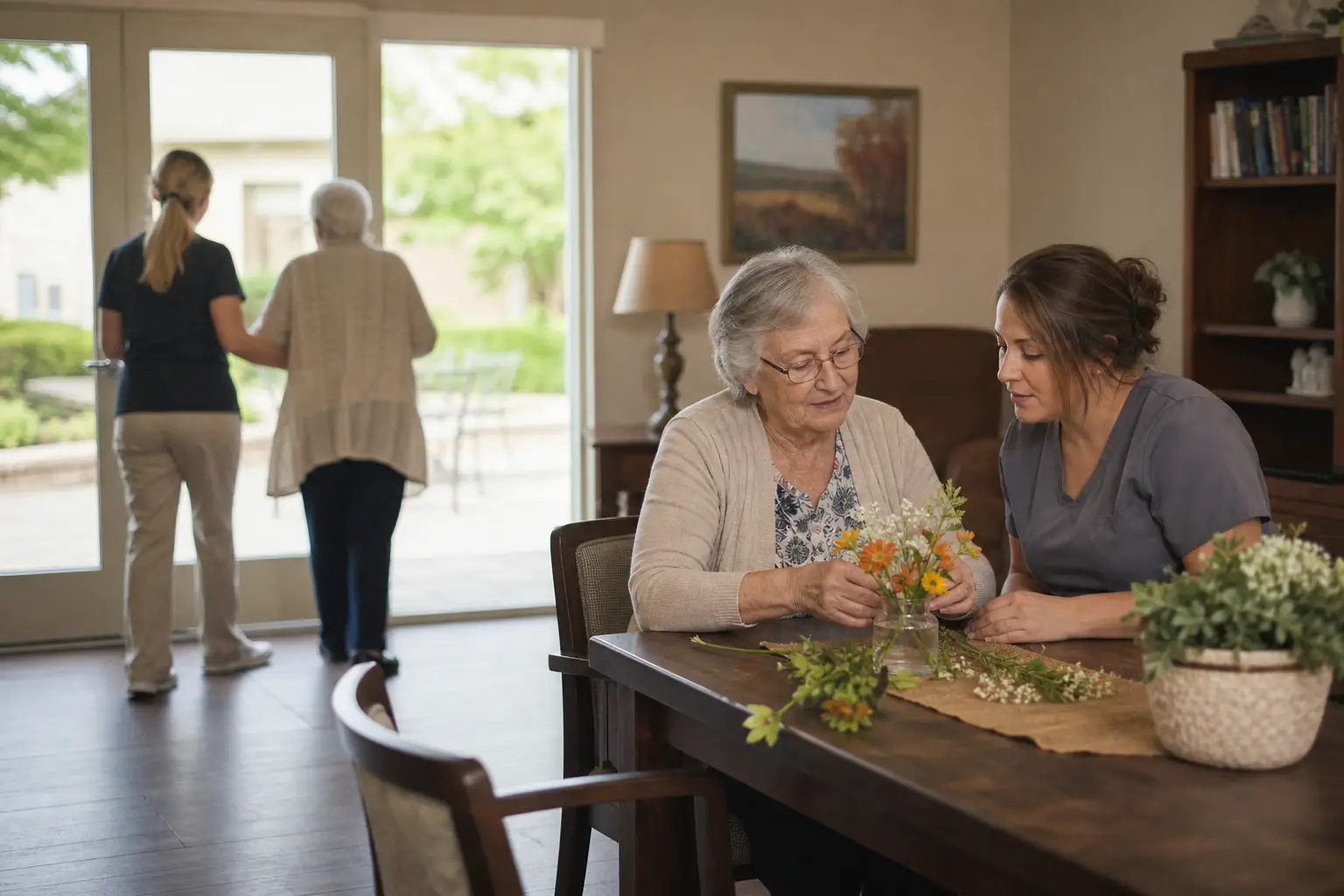
Memory care asks a team to protect safety without losing sight of dignity, independence, and the person in front of them. We learn how residents move through the day, how staff maintain awareness, how the environment supports them, and what happens when a routine suddenly changes.
Inside memory care
Where does attention matter most?
The operation depends on people, routines, physical safeguards, communication, and an environment designed around residents whose needs can change from one moment to the next.
- 01
Supervision without taking away dignity
Residents need freedom, routine, and meaningful days, while staff maintain awareness of where people are and how their needs are changing. That balance is the center of the operation.
- 02
Wandering and elopement safeguards
Doors, courtyards, alarms, wearable devices, visitor access, staffing, and response plans work together. No single piece of technology replaces an attentive team and a practiced process.
- 03
Behavior and communication changes
Distress, resistance, sleep disruption, and difficulty communicating can change the way care is delivered. Staff training and a consistent response help protect residents and the people caring for them.
- 04
Falls, medication, and changing needs
Cognitive change often overlaps with mobility, medication, and health concerns. Observing and documenting small changes can be as important as responding to a major event.
- 05
Families who need a clear answer
A family may be carrying grief, worry, and a long history with the resident. Timely communication and a straightforward explanation can keep a difficult day from becoming a lasting breach of trust.
- 06
An environment designed for attention
Sightlines, secure outdoor space, door hardware, lighting, furniture, fire protection, and the layout of shared rooms all affect how safely staff can support residents.
What we need to understand
What makes one memory care operation different from another?
Memory care is not one fixed model. The residents, setting, staffing, safeguards, training, and connection to a larger community all change what the team is being asked to manage.
Six details that show us how attention becomes a repeatable practice.
- 01
Stand-alone community or secured neighborhood
A dedicated memory care building and a secured wing inside assisted living share some needs but differ in staffing, access, services, and how residents move through the property.
- 02
Who the community can support
Resident assessment, behavior, mobility, medical needs, and the point at which a transfer becomes necessary should be clear in both policy and daily practice.
- 03
Staffing and line of sight
The number of staff matters, but so do assignments, supervision, breaks, overnight coverage, door response, and whether the layout lets the team maintain awareness.
- 04
Doors, alarms, and response
A safeguard is useful only if it works, staff notice it, and the next step is understood. We look at the whole response rather than treating the door system as the plan.
- 05
Training that reaches the floor
Orientation, dementia-specific training, de-escalation, abuse prevention, incident reporting, and coaching need to show up in everyday interactions, not only in a binder.
- 06
How the team communicates after an event
Documentation, family contact, clinical follow-up, internal review, and corrective action shape how the event is understood and whether the same conditions remain.
Memory care insurance questions
What insurance does a memory care community need?
A memory care community needs a plan for resident care, supervision, employees, the secured environment, medication support, sensitive information, transportation, property, and continued operations. The right structure depends on whether it is stand-alone or part of another community and on the residents and services it supports.
How does memory care insurance differ from assisted living insurance?
Memory care places greater emphasis on cognitive impairment, supervision, wandering and elopement safeguards, behavior response, secure spaces, specialized training, and family communication. A secured memory care neighborhood inside assisted living may also need to be understood separately from the rest of the community.
What do insurers want to know about elopement prevention?
They typically want to understand resident assessment, door and alarm systems, wearable technology if used, staffing and sightlines, visitor access, response procedures, drills, prior incidents, and what changed afterward. The strongest answer describes how the pieces work together during an ordinary shift.
When should a memory care operator review its insurance?
Review it before renewal and after a change in resident needs, staffing, leadership, door systems, building layout, services, ownership, or a significant incident. Early review creates time to explain the operation accurately and address meaningful gaps without making rushed decisions.
Let’s look at how attention works across the whole day.
Tell us about the residents, the team, the safeguards, and the building. We will help connect those realities into a clearer plan.