

Assisted living insurance
Protect the independence
your community supports
Assisted living works in the space between complete independence and around-the-clock clinical care. We learn who lives in the community today, how the team supports them, where needs are changing, and what it would take to keep residents safe and settled through an interruption.
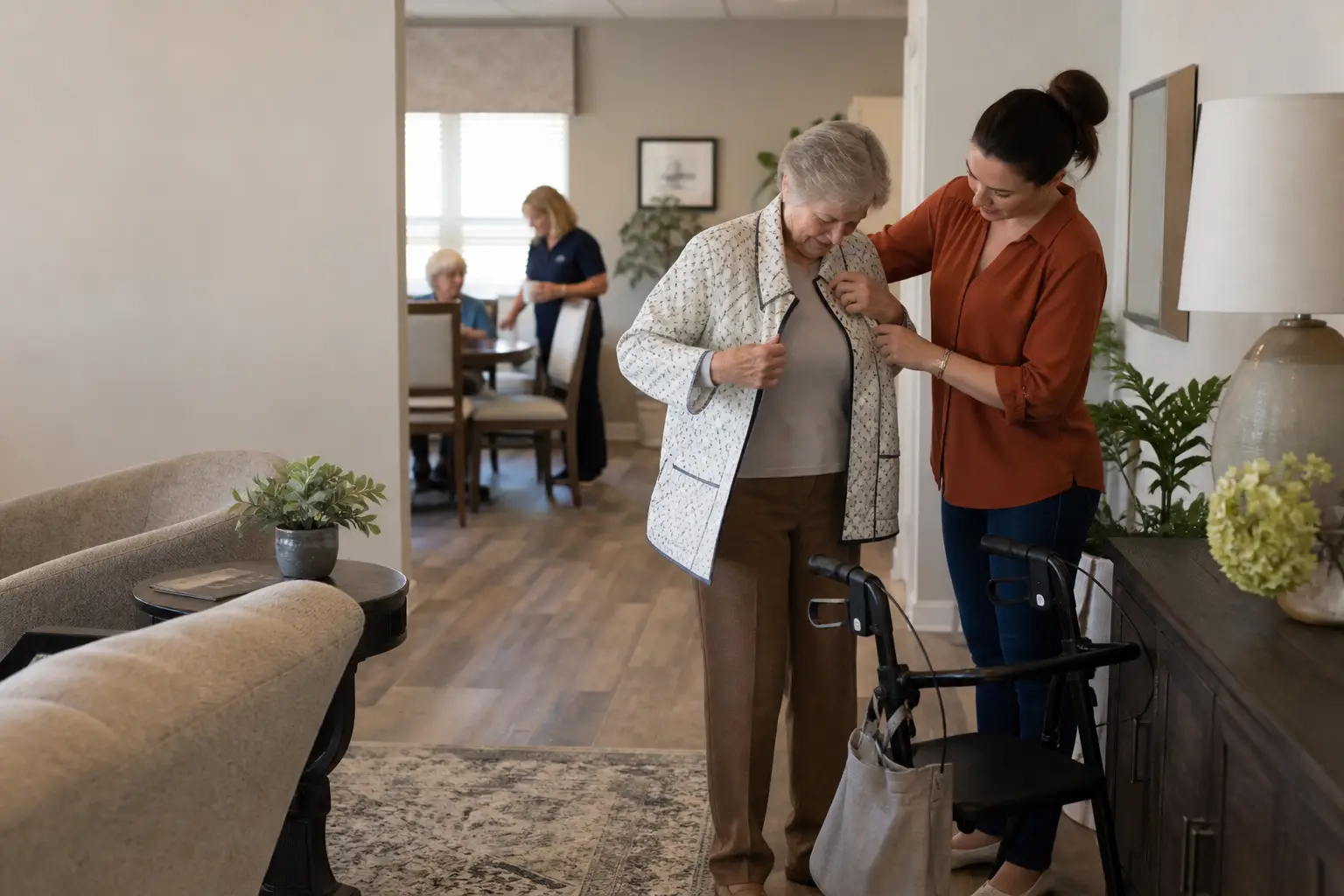
Inside the community
Where does assisted living carry responsibility?
An assisted living community is a home, a workplace, and a care environment. The difficult moments often happen where those roles overlap.
- 01
Independence with support nearby
Residents choose assisted living because they still want a home and a life of their own. The operation has to provide the right help without treating every resident as though they need the same level of care.
- 02
Needs that change over time
Mobility, cognition, medication, and personal-care needs can change gradually. Assessments, care plans, family conversations, and transfer decisions help the building stay honest about what it can support.
- 03
Medication and everyday assistance
A routine day may include medication help, bathing, meals, transportation, activities, and an unexpected call for assistance. Clear roles and consistent documentation matter across all of it.
- 04
Falls, supervision, and response
Apartments and common spaces are designed for freedom, but a fall or missed change in condition can quickly raise questions about what staff knew, what was documented, and how the team responded.
- 05
A residential building with care inside
Kitchens, laundry, elevators, sprinklers, HVAC, roofs, generators, resident belongings, and shared spaces create a property operation that never fully empties.
- 06
Families, vendors, and outside providers
Home health, hospice, therapy, pharmacies, transportation, families, and private-duty caregivers may all enter the community. Their roles should be understood before an incident blurs the lines.
What we need to understand
What makes one assisted living community different from another?
Two communities may share the same license while serving residents with different needs in very different buildings. We look beyond the category to understand the day the team is actually managing.
Six details that help us see the community as it operates today.
- 01
The residents who live there now
The actual mix of mobility, cognition, medication, and personal-care needs says more than the words on the license. We want a current picture of who the community serves.
- 02
Where the line of care is drawn
Operators make daily decisions about what staff can safely support and when a resident needs a different setting. Assessment and transfer practices are part of the risk story.
- 03
How the team is organized
Administrator coverage, nursing oversight, medication staff, direct-care staffing, call systems, training, and overnight response can look very different from one community to the next.
- 04
Memory support within the community
A dedicated wing, secured area, or changing resident population introduces different supervision, environment, and staffing questions even when memory care is not the whole operation.
- 05
The age and layout of the property
Long corridors, elevators, kitchens, resident apartments, balconies, fire protection, storm exposure, and deferred projects shape both daily safety and the cost of recovery.
- 06
How incidents are handled
The first response, family communication, documentation, review, and follow-through often matter as much as the event itself. We look for a process the team can actually repeat.
Assisted living insurance questions
What insurance does an assisted living community need?
An assisted living community needs a plan for resident support, employees, medication assistance, the occupied property, vehicles, sensitive information, outside providers, and the income needed to keep the community operating. The right structure begins with the residents the building serves and the help staff provide each day.
How is assisted living insurance different from nursing home insurance?
Assisted living is built around residential independence with personal care, medication help, nursing supervision, and intermittent or unscheduled nursing care. A nursing facility provides 24-hour skilled nursing care. The distinction affects the residents served, staffing model, regulatory environment, building use, and the incidents an insurer expects to understand.
Why does resident acuity matter for assisted living insurance?
The needs of residents can change even when the facility license does not. Mobility, cognition, medication, transfers, and personal-care needs affect supervision, staffing, training, and whether the community remains the right setting. A review should reflect the people living there now, not an old description of the community.
When should an assisted living operator review its insurance?
Review it before renewal and after a meaningful change in resident mix, services, memory support, staffing, ownership, property, transportation, vendors, or leadership. Starting early gives the operator time to explain the change and correct the plan before the renewal date narrows the options.
Let’s understand the community as it is today.
Tell us about the residents, the team, the building, and the changes you are managing. We will help shape a plan around the real operation.