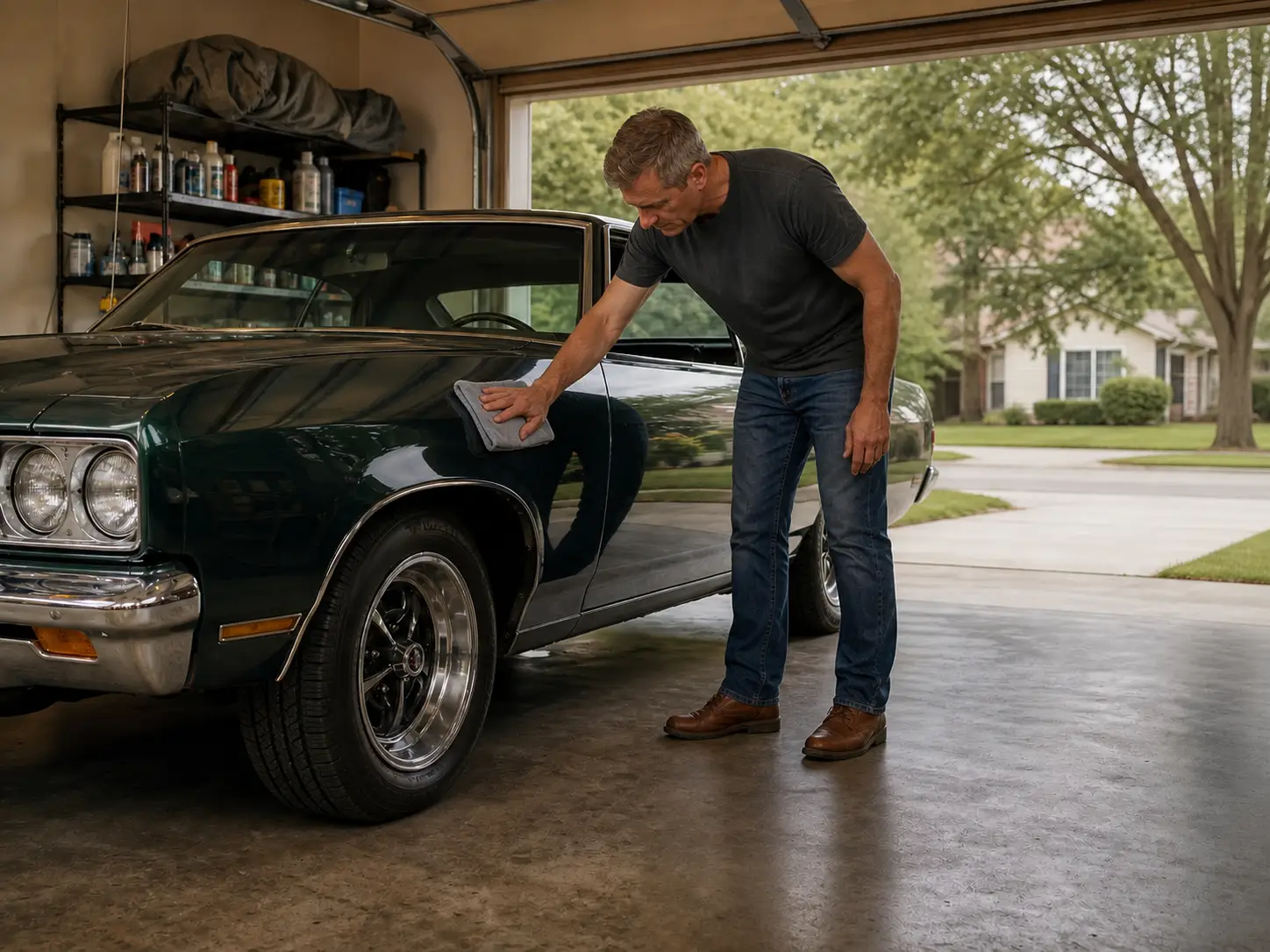
Two cars with the same year, make, and model can be worth completely different amounts. Condition, originality, restoration work, storage, and the market for that exact car all belong in the conversation.
More than transportationSaturday morning starts in the garage.
Built for collectors
What makes classic car insurance different?
Classic car insurance is built around a car with a known collector value and limited, intentional use. It can account for agreed value, specialty repairs, careful storage, spare parts, restoration work, and towing that will not damage the car. The goal is to insure this vehicle, not an average example from a pricing guide.
01
A value set up front
Agreed value starts with deciding what the car is worth before a loss. Photos, condition, receipts, restoration work, and the market for that model help support the number.
02
Repairs that respect the car
A collector car may need a specialist, harder-to-find parts, or repair decisions that would make no sense for an ordinary daily driver.
03
The miles you actually drive
Shows, club events, Sunday drives, and the occasional errand are normal parts of ownership. The mileage plan should reflect how the car really leaves the garage.
04
Parts, tools, and memorabilia
Spare parts, specialty tools, manuals, signs, and other automobilia can grow into their own collection and may have limits separate from the car.
05
A tow that will not make it worse
When the car cannot finish the trip, the right towing setup matters. A flatbed or specialized transport can be worth far more than ordinary roadside dispatch.
06
A project still in progress
A restoration can gain value as parts and labor go into it. The insured amount may need to move with the project instead of waiting for the car to be finished.
Before requesting a quote
What should a collector have ready?
A collector should have current photos, a realistic value, an honest estimate of annual mileage, and a clear description of storage and modifications. Appraisals and receipts help when restoration work or rarity pushes the car beyond ordinary market guides. Better documentation makes it easier to compare quotes on the same car and the same use.
The more unusual the car, the less useful a generic year-make-model answer becomes.
01
Good current photos
A clear walkaround, interior, engine bay, odometer, and any important details make the condition easier to understand.
02
Receipts and appraisals
Restoration invoices, major parts receipts, appraisals, and recent comparable sales can help explain a value that a pricing guide misses.
03
Your normal driving
Annual mileage matters, but so does what those miles are for. A show calendar and a daily commute tell very different stories.
04
Where it sleeps
A private locked garage, shared collector storage, and a carport are not treated alike. Be clear about where the car spends most nights.
05
What is not original
Engine swaps, custom paint, modern brakes, upgraded interiors, and other changes can add value even when they move the car away from factory specifications.
06
The rest of the collection
If you own several cars, each still needs its own value and use, but keeping the collection together can make it easier to manage.
Agreed value
Agreed value puts the number on the table before a loss. We help gather the photos, history, receipts, appraisal, and comparable sales that explain why this car is worth more or less than another example with the same badge on the grille.
Usage and mileage basis
A Sunday drive, a local show, and a daily commute are not the same use. Collector carriers usually want another vehicle available for everyday driving and a realistic estimate of annual mileage. We describe the actual routine so the rules do not become a surprise later.
Common classic car insurance questions
What is agreed-value classic car insurance?
+
Agreed value means you and the insurer settle on the car’s insured value when the policy is written. If a covered total loss occurs, that agreed amount is the starting point rather than an ordinary used-car valuation. Photos, condition, receipts, appraisals, and comparable sales help explain what makes the car worth that number.
Can I drive a classic car regularly?
+
Collector policies are usually built for pleasure use rather than daily commuting, but that does not mean the car has to stay parked. Shows, club events, weekend drives, and occasional errands are commonly allowed. We use an honest mileage estimate and make sure the rules fit the way you enjoy the car.
Does classic car insurance cover restoration work?
+
Some collector policies can cover an eligible car while it is being restored and allow the insured value to increase as documented work is completed. Parts waiting to be installed, tools, transport, and work at a restoration shop can raise separate questions. We start with the project’s current stage, not its hoped-for finished value.
Want a collector car quote?
Tell us what you own, what you believe it is worth, where it stays, and how often you drive it. We will help you compare the options on the same terms.