

Skilled nursing facility insurance
Coverage built around care
that never clocks out
A skilled nursing facility is a clinical operation, an occupied building, a large workforce, and a home for residents, all at once. We learn how care moves from shift to shift, where the building is most vulnerable, and what the team has already done to make the operation stronger.
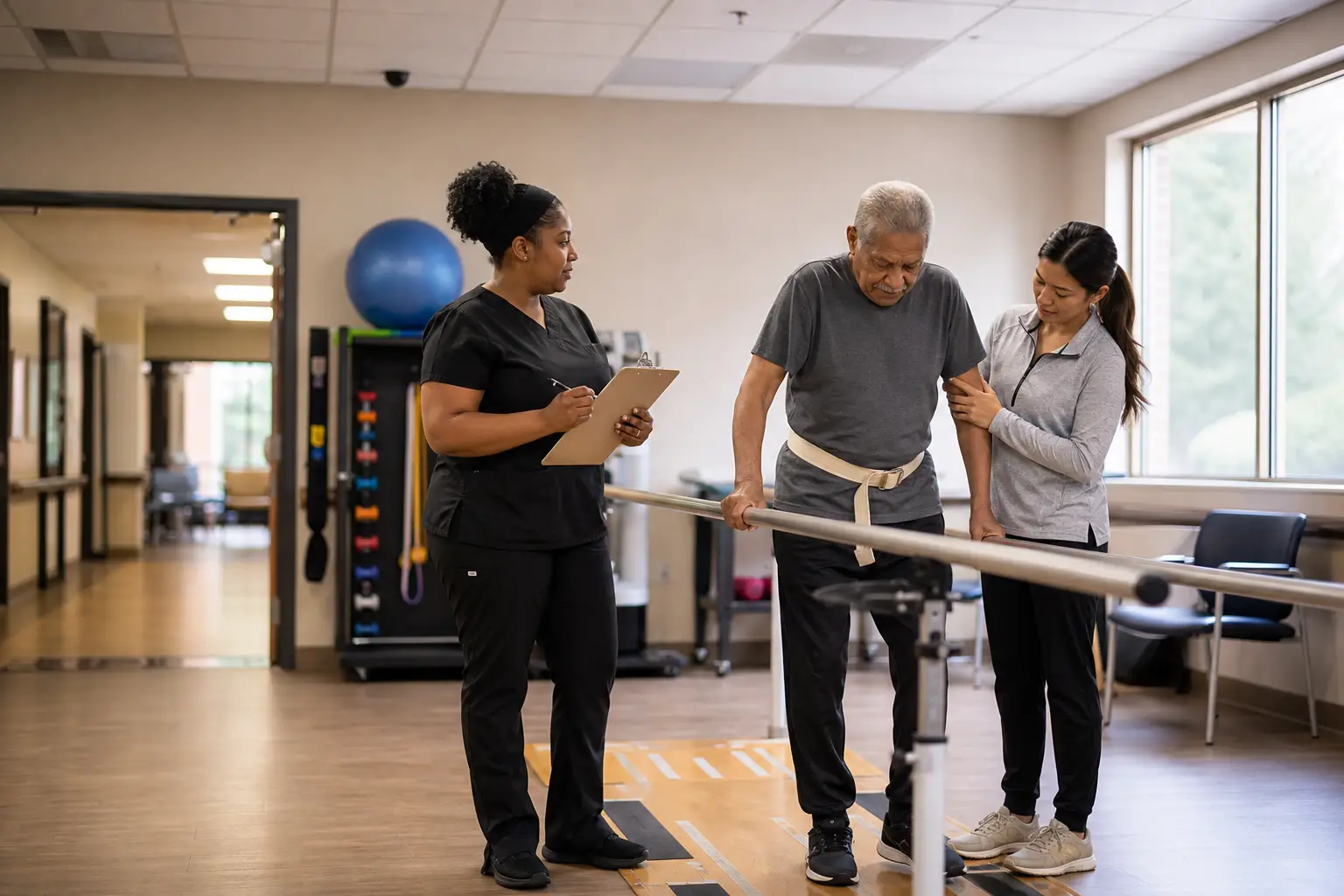
Inside the facility
What has to keep working around the clock?
The care team is only one part of the picture. Staffing, documentation, infrastructure, vendors, technology, and emergency planning all have to support residents on the same day.
- 01
Care that never pauses
A skilled nursing facility is responsible for residents around the clock. Changes in condition, medication, wound care, falls, transfers, and family communication all depend on the same team staying coordinated.
- 02
Staffing on every shift
The schedule on paper is only the beginning. Turnover, agency staff, weekend coverage, call-ins, supervision, and the handoff between shifts shape what actually happens inside the building.
- 03
Surveys and quality history
Health inspections, staffing data, quality measures, plans of correction, and complaint history are visible parts of the operation. We look at the story behind them, not just the latest score.
- 04
The building behind the care
Life-safety systems, emergency power, kitchens, laundry, therapy spaces, resident rooms, medical equipment, and aging infrastructure all have to keep working while the building remains occupied.
- 05
Information and documentation
The clinical record, MDS work, pharmacy connections, payroll systems, and family communication hold sensitive information and help explain the care that was provided long after an event.
- 06
Recovery without closing the doors
A storm, utility failure, equipment problem, cyber event, or damaged wing does not erase the responsibility to residents. The recovery plan has to work while care continues.
What we need to understand
What makes one skilled nursing facility different from another?
A license and bed count do not explain the residents, the workforce, the building, the survey history, or the way leadership responds when something goes wrong. Those details are where a useful review begins.
Six parts of the operation that help us understand the real facility.
- 01
Resident mix and acuity
Short-stay rehabilitation, long-term residents, memory support, ventilator care, and other services create very different days inside facilities with the same license.
- 02
How the building is staffed
We want to understand the normal schedule, agency dependence, leadership coverage, turnover, weekend patterns, and how a sudden gap is handled.
- 03
Survey and correction history
A citation needs context. We look at what happened, how the facility responded, whether the correction held, and what the current team changed afterward.
- 04
Incidents and claims over time
A claim may develop long after the resident encounter. Reliable incident reporting, preserved documentation, and a consistent response help keep one event from becoming harder to defend.
- 05
Ownership and working relationships
The licensed operator, property owner, management company, therapy provider, pharmacy, medical director, and vendors may all play different roles. Those relationships should be clear before a claim tests them.
- 06
What keeps the facility operating
Generators, roofs, sprinklers, boilers, elevators, kitchens, laundry, transportation, and technology each support resident care. We identify which failures would create the longest and most expensive disruption.
Skilled nursing insurance questions
What insurance does a skilled nursing facility need?
A skilled nursing facility needs a plan for resident care, employees, the occupied building, equipment, vehicles, sensitive information, leadership decisions, and an interruption that cannot simply send everyone home. The exact policies matter, but the work starts with understanding how the facility delivers care and what it relies on every day.
Why is skilled nursing liability difficult to insure?
Residents often have complex needs, care is continuous, staffing changes by shift, and an event may be reviewed through clinical records, surveys, staffing data, and family communication months or years later. Insurers also look closely at loss history and operational trends. A clear, current account of how the facility works is more useful than a generic description of its license.
How do surveys and staffing affect a skilled nursing insurance review?
They help explain the environment in which care is delivered. Survey findings, correction plans, staffing levels, turnover, agency use, and weekend coverage can reveal both pressure points and meaningful improvements. We review the context and the response instead of treating one number as the whole facility.
When should a skilled nursing operator begin a renewal review?
Begin well before renewal, especially after a leadership change, acquisition, service expansion, major loss, survey issue, renovation, or shift in staffing strategy. Early work creates time to explain the operation accurately, correct schedules and entity details, and make decisions before the renewal date takes over.
Let’s start with the building you actually run.
Tell us about the residents, the team, the property, and what has changed since the last renewal. We will help turn that operating picture into a clearer plan.