

Multi-site senior care insurance
One program should still see
each building clearly
A multi-site organization needs consistency without pretending every facility is the same. We map how ownership, leadership, resident care, staffing, property, vendors, technology, and loss history connect across the group, then help leadership see where one approach works and where a building needs its own answer.
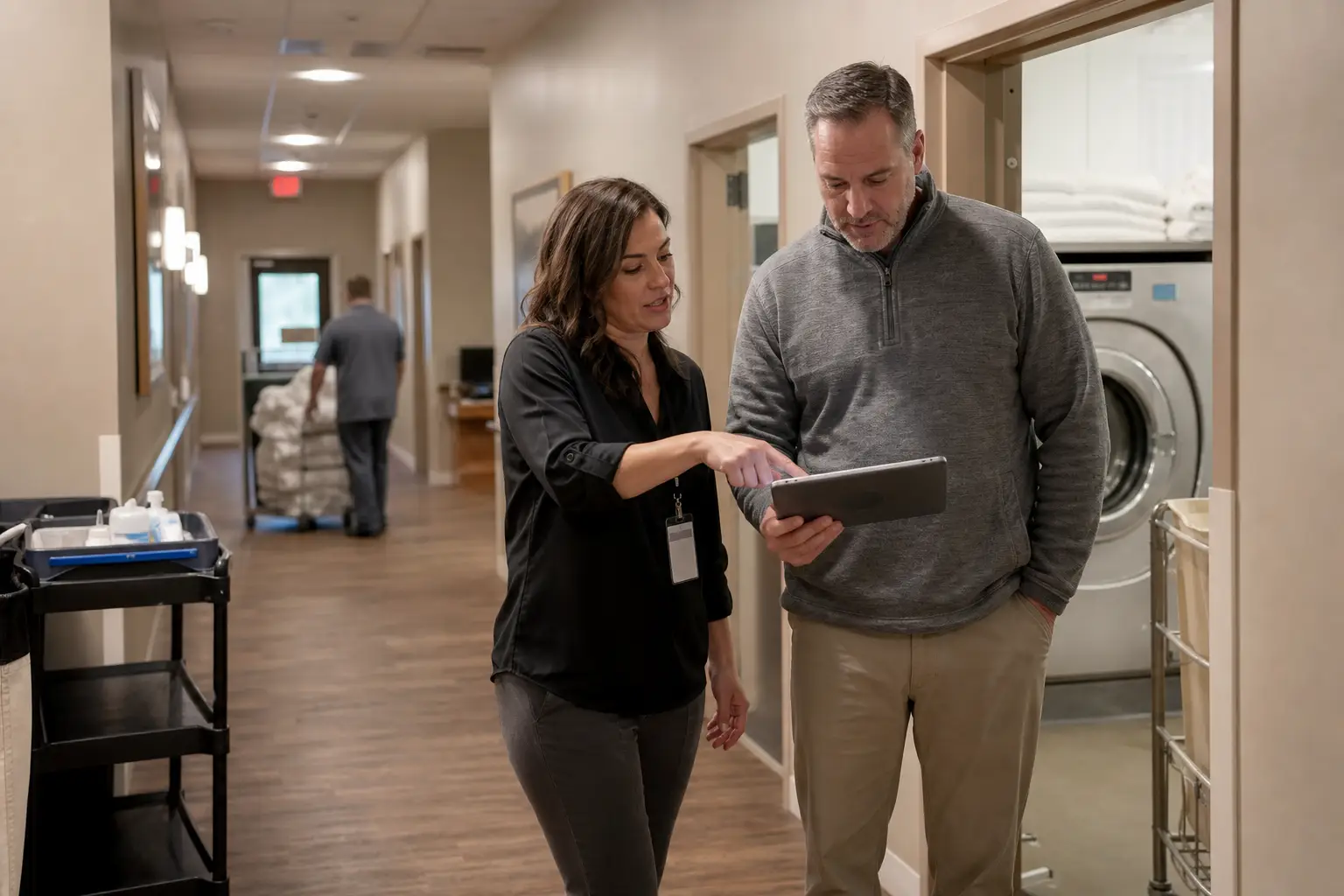
Across the organization
What has to connect across every location?
A group program should create clarity, not flatten the differences that leadership is already managing. The useful work is seeing the shared system and the building-level reality together.
- 01
One organization, different buildings
Leadership may set the direction centrally, but each facility has its own residents, staff, property, survey history, vendors, and local habits. The plan has to see both the system and the exceptions.
- 02
Ownership that matches reality
Operating entities, property companies, management agreements, joint ventures, and acquired locations can create a structure that changes faster than the insurance schedule. Names and roles need to stay current.
- 03
Claims that reveal patterns
One event belongs to one facility, but repeated falls, staffing issues, water losses, vehicle incidents, or response delays may show an organization-wide problem or a building that needs attention.
- 04
Shared people and services
Regional nurses, maintenance teams, therapists, transportation, IT, payroll, pharmacy relationships, and outside vendors may cross locations. A failure in one shared service can reach several buildings at once.
- 05
Property with uneven needs
Values, roofs, sprinklers, generators, boilers, renovations, deferred projects, and storm exposure vary by address. A single blanket assumption can hide the building most likely to drive the loss.
- 06
Growth without inherited surprises
An acquisition brings more than beds and revenue. It brings entities, contracts, people, claims, maintenance history, survey findings, and systems that need to be understood before they disappear into the portfolio.
What we need to understand
What makes a multi-site senior care organization complex?
The number of facilities is only the surface. Ownership, control, shared services, local performance, property conditions, and the pace of growth determine how the organization really fits together.
Six details that help us see the organization without losing the buildings inside it.
- 01
How control is actually divided
We want to know which decisions sit with corporate leadership, regional teams, administrators, clinical leaders, and property owners. The organization chart should match daily authority.
- 02
Location-level performance
Facility-specific incidents, turnover, surveys, staffing, quality measures, and property losses help separate an isolated event from a repeatable pattern.
- 03
Entity and contract structure
Operating companies, landlords, management firms, vendors, medical directors, and therapy or pharmacy partners may carry different responsibilities at different locations.
- 04
Shared systems and single points of failure
A centralized technology platform, payroll process, call center, transportation fleet, vendor, or leadership role can improve consistency while also creating a problem that reaches every facility.
- 05
The acquisition pipeline
A new building needs a disciplined path into the program. Loss history, property values, inspections, contracts, entity details, and open issues should be gathered before the closing date creates the deadline.
- 06
What leadership wants to improve next
The strongest review is not only about what happened last year. It also accounts for planned renovations, staffing changes, service growth, divestitures, technology projects, and the buildings receiving attention next.
Multi-site operator insurance questions
How should a multi-site senior care insurance program be structured?
The structure should reflect the organization’s real ownership, management, services, property, workforce, vehicles, technology, and location-level differences. Some parts benefit from one coordinated program, while a facility or entity may need separate treatment. The right answer comes from mapping how control and responsibility move across the organization.
Why should loss history be reviewed by location?
A consolidated total can hide the difference between one unusual event and a pattern repeating across several buildings. Reviewing frequency, severity, incident type, response, staffing context, and corrective action by location helps leadership focus on the conditions that can actually be changed.
What should happen when a senior care operator acquires a facility?
Before closing, gather the entity and ownership details, contracts, property information, inspections, values, vehicles, employees, services, loss history, survey history, open claims, and known projects. Then decide how the building enters the larger program and which issues need their own timeline rather than assuming every location can be treated the same on day one.
When should a multi-site operator begin its renewal review?
Begin early enough to collect reliable information from every location, review losses and property values, explain changes, and let leadership make decisions before renewal becomes urgent. Organizations with acquisitions, major projects, difficult claims, or changing entities should start earlier still.
Let’s see the program and the buildings at the same time.
Tell us how the organization is structured, where the facilities differ, and what leadership is working to improve. We will build the review around that reality.