

Motorhomes
A motorhome is both a vehicle and a place to live for part of the trip. We look at who drives it, how far it goes, what has been added to it, and what your family depends on once it is parked.
RV and travel trailer insurance
Maybe it is a travel trailer headed to Lake Murray, a motorhome crossing state lines, or a camper that stays set up most of the season. We start with how your family actually uses it.
The whole trip
RV insurance should account for the drive, the camper itself, the time you spend parked, and the things your family brings along. A useful policy considers what could interrupt the trip as well as what could damage the RV, because a problem hours from home rarely stays simple.
A motorhome has its own driving risks. A trailer depends on the vehicle pulling it. Either way, the trip starts before you reach the campground.
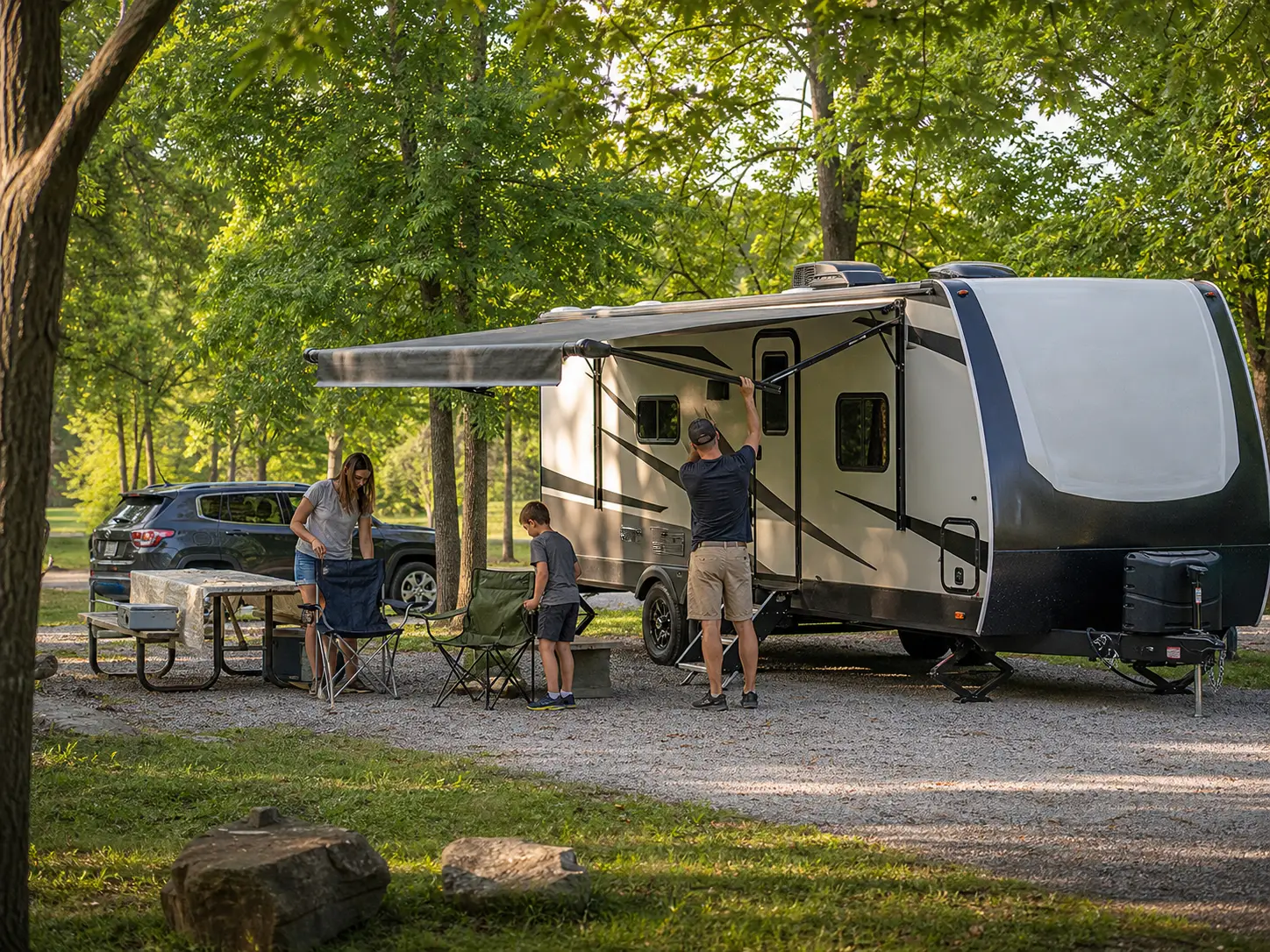
A campsite becomes your living space for the weekend, complete with guests, neighbors, hookups, awnings, and plenty happening outside the RV.
Camp chairs, grills, bikes, electronics, tools, and everything else packed for the trip may not all be treated the same after a loss.
A breakdown or covered loss far from home can mean towing, a hotel, or a changed route. Those details matter when help is not close by.
Where RV policies differ
Two RV policies can look different because the campers may lead completely different lives. A motorhome, fifth wheel, and travel trailer do not work the same way. Neither do a weekend lake camper, a seasonal setup, and a full-time home. The right comparison starts with those differences, not just the price.
The name on the policy may be the same. The life happening around the RV may not be.
A motorhome drives under its own power. A travel trailer or fifth wheel creates a handoff between the camper and the tow vehicle.
A few lake weekends are different from spending months on the road or leaving the camper at one site for the season.
Where the RV sits between trips matters, especially when it spends more time stored than moving.
Living in an RV changes the role it plays in your life. A vacation policy should not be asked to act like homeowners coverage.
A motorhome is both a vehicle and a place to live for part of the trip. We look at who drives it, how far it goes, what has been added to it, and what your family depends on once it is parked.
Travel trailers and fifth wheels rely on another vehicle to get anywhere. We review the truck and camper together, including how they work while connected and what happens to the trailer when it is parked, stored, or set up at the campground.
Some campers stay at the same site all summer. Others become home for months or years. We make that clear before asking for quotes, because a policy built around occasional vacations may leave the wrong assumptions in place.
Your auto policy may extend liability from the tow vehicle while the trailer is attached, but it usually does not fully protect the trailer itself. Damage to the camper, its equipment, and what you keep inside may require separate coverage. We review the truck and trailer together so nothing gets lost between them.
RV insurance may cover some belongings inside the camper, but the amount and the kinds of property included vary. Bikes, electronics, fishing gear, jewelry, and other valuables may need a closer look. Your home or renters policy might also apply, so we check where one policy stops and another begins.
A full-time RV is your home, not just something you take on vacation. That changes how personal liability, belongings, temporary living arrangements, and everyday use should be handled. We make the living arrangement clear from the start so the policy is written for the life happening inside it.
Tell us what you have and how your family uses it. We will help you compare the details before your next trip.