

Healthcare property insurance
Protect the building
that keeps care moving
A healthcare facility is more than square footage. The building, clinical buildout, utilities, equipment, medication storage, and technology all have to be ready before the first patient arrives. We learn what the operation depends on and how long it would take to put back together.
Inside the facility
What makes healthcare property different?
Clinical spaces cost more to build, depend on specialized systems, and may need inspections or equipment validation before they can reopen. The recovery plan should reflect the operation inside the building, not just the walls around it.
- 01
The building and clinical buildout
Walls and a roof are only the beginning. Medical gas, plumbing, electrical work, shielding, cabinetry, cleanable finishes, and specialized rooms can make the facility expensive to recreate.
- 02
Medical and office equipment
Diagnostic systems, treatment equipment, furniture, computers, supplies, and tenant-owned improvements should reflect what is actually inside the facility and what replacement would cost.
- 03
Equipment and utility failure
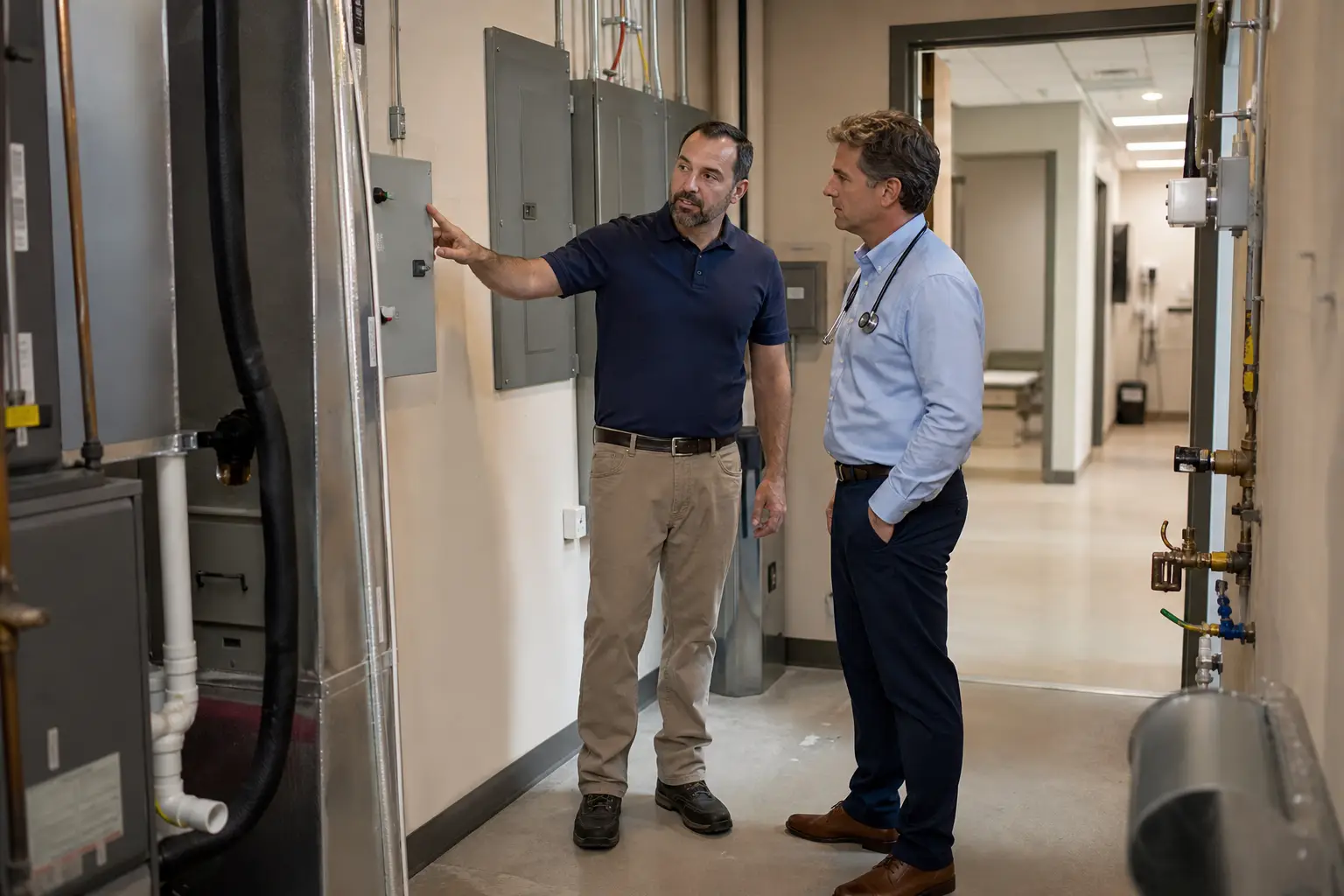
Power, HVAC, water, refrigeration, compressors, and other building systems can stop care without a fire or tornado. The facility’s dependencies matter as much as its square footage.
- 04
Storm, water, and fire damage
Oklahoma weather and ordinary building failures can affect roofing, interiors, electronics, medication, and patient areas at the same time. Deductibles and repair assumptions deserve a close look.
- 05
Code upgrades and rebuilding
A repaired healthcare space may have to meet current building, accessibility, electrical, life-safety, or clinical requirements. The old space is not always the price of the new one.
- 06
Time away from patients
Repairs, inspections, equipment delivery, and finding temporary space can stretch the closure beyond the visible construction. The facility still has expenses while care goes elsewhere.
What we need to understand
What should an advisor know about your healthcare facility?
A replacement-cost estimate can look precise while missing the buildout, utility dependencies, leased equipment, storm deductible, or time required to reopen. We want to understand the building the way the practice uses it.
Six details that change how a facility recovers.
- 01
Who owns what
The landlord may own the shell while the practice owns the buildout, equipment, signs, and improvements. The lease should not be the first place anyone checks after damage.
- 02
How specialized the space is
An ordinary office and a clinic with imaging, medical gas, procedure rooms, or a pharmacy cannot be rebuilt on the same assumptions.
- 03
What the operation cannot lose
One compressor, electrical panel, server closet, chiller, or water line may support several rooms. We want to identify the single points that can stop care.
- 04
How equipment is valued
Schedules go stale as equipment is added, financed, leased, or replaced. Purchase price, installation, calibration, and lead time all affect the real recovery.
- 05
Roof and storm deductibles
A percentage deductible can turn into a large out-of-pocket number on a medical building. Roof age, valuation, and wind or hail terms should be read together.
- 06
What reopening requires
Finishing construction may not mean the facility is ready for patients. Testing, inspection, licensing, vendor setup, and equipment validation can extend the timeline.
Healthcare property insurance questions
What does healthcare property insurance cover?
Healthcare property insurance can protect the building, tenant improvements, medical equipment, furniture, supplies, and other property after covered damage. The details vary by policy and by who owns each item. A useful review starts with the actual facility, lease, equipment list, utility dependencies, and cost to resume patient care.
Does a leased medical office need property insurance?
Usually, yes. The landlord may insure the building shell while the practice remains responsible for equipment, furniture, signs, cabinetry, tenant improvements, and lost income after damage. The lease assigns responsibilities, but it does not automatically create coverage. Compare the lease with the policy before assuming the landlord handles everything.
What is equipment breakdown coverage for a healthcare facility?
Equipment breakdown addresses certain sudden mechanical, electrical, or pressure-system failures that ordinary property coverage may not handle the same way. In a healthcare facility, that can involve HVAC, electrical systems, refrigeration, compressors, sterilizers, or medical equipment. The important question is which failure could stop care across several rooms.
How should a clinic choose a property limit?
Start with what it would cost to rebuild the space and replace the property at current prices, not what the practice originally paid. Include specialized construction, installation, freight, calibration, code upgrades, and professional fees. Owned and leased items should be separated so the same property is not missed or counted twice.
Let’s understand what the building has to support.
Tell us what happens inside the facility, what systems the work depends on, and what reopening would require. We will build from there.