

Dental practice insurance
Coverage for the work
behind every chair
A dental practice depends on clinical judgment, specialized equipment, a trained team, and a schedule that rarely leaves much room for interruption. We learn how the office delivers care and what could take it off course, then build around the parts that would be hardest to replace or restart.
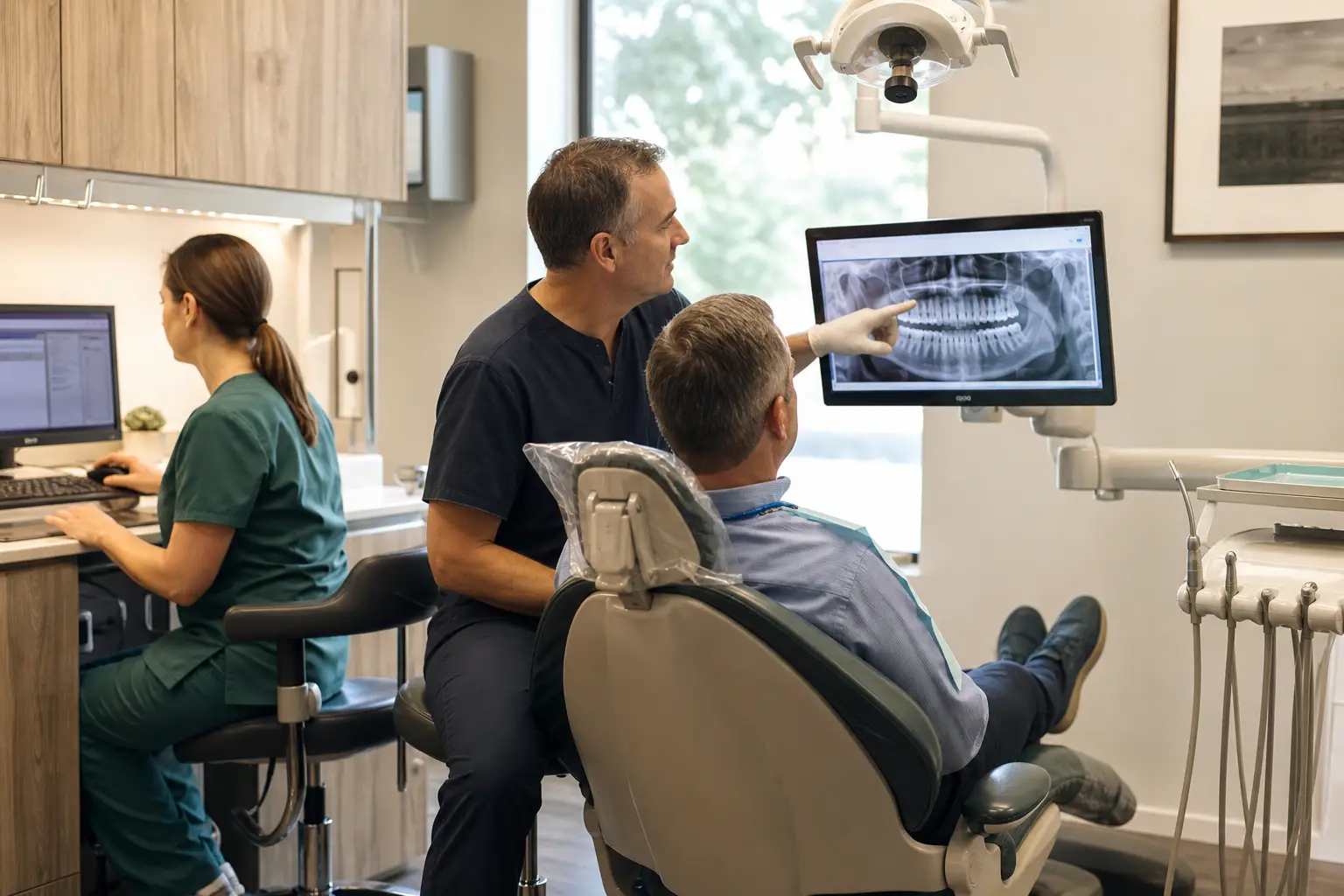
Inside the dental office
What can interrupt a dental practice?
Patient care happens in a space built around equipment, water, air, power, sterilization, emergency readiness, records, and a team working on a tightly connected schedule. A problem in one place can close several rooms or change the whole day.
- 01
Dental malpractice
A patient may question a diagnosis, treatment plan, procedure, referral, or result. The coverage should follow the dentists, hygienists, services, and clinical work the office actually performs.
- 02
Property and dental equipment
The chairs, imaging systems, sterilizers, compressors, cabinetry, and buildout are what turn an office into a dental practice. Replacing them is rarely as simple as ordering another desk.
- 03
Equipment breakdown
A failed compressor, vacuum, autoclave, or electrical component can stop several rooms at once. The important question is how quickly the office can safely return to the schedule.
- 04
Cyber and patient privacy
Scheduling, imaging, billing, and records often depend on the same systems. When access disappears or patient information is exposed, the problem reaches the front desk and every operatory.
- 05
Time away from patients
A closed office still has payroll, rent, equipment payments, and a full schedule that has to go somewhere. Recovery planning should reflect how long repairs and replacement could actually take.
- 06
Injuries involving the team
Dental teams work in tight positions, handle sharps, repeat small movements, and spend long days leaning over patients. An injury affects the person, the schedule, and often the rest of the staff.
What we need to understand
What should an advisor know about your dental practice?
The words “dental office” do not tell us whether you place implants, use sedation, run your own lab, lease every major system, or depend on one compressor for the whole floor. Those details are what make the plan fit.
Six details that show us how the office really runs.
- 01
The procedures performed
General dentistry, implants, oral surgery, orthodontics, and cosmetic work do not create the same clinical picture. The description should keep pace as services, patient complexity, and follow-up responsibilities change.
- 02
Everyone providing care
Owners, associates, hygienists, temporary clinicians, and separate entities may share the office. The structure needs to match who treats patients and how each person works there.
- 03
What the equipment really costs to replace
Purchase price is only the beginning. Installation, calibration, plumbing, electrical work, shipping time, and lost production can make a damaged system far more consequential.
- 04
Sterilization and water systems
An autoclave, dental unit waterline, or related system can affect more than one appointment. We want to understand the dependencies that can take rooms out of service.
- 05
Sedation and emergency readiness
Sedation changes the people, monitoring, equipment, medications, documentation, and emergency preparation around a procedure. We want to understand the level used and how the team responds when a patient needs more help than expected.
- 06
Follow-up and patient continuity
A complication may surface after the patient leaves, and a closure can interrupt work already underway. The review should account for emergency communication, follow-up, referrals, and the office’s real path back to care.
Dental practice insurance questions
What insurance does a dental practice usually need?
A dental practice needs a plan for both clinical care and the office that makes it possible. That means considering malpractice allegations, damaged dental equipment, system outages, patient-data incidents, staff injuries, ordinary accidents, and a closure that interrupts the schedule. The mix should follow how the practice actually operates.
Does a dentist need malpractice insurance?
Dental malpractice insurance addresses claims that a dentist’s professional care caused harm. The details should reflect the procedures performed, the clinicians delivering them, and the dates when coverage began. An owner should also confirm how associates, hygienists, temporary providers, and prior clinical work are treated.
Why does dental equipment need special attention?
Dental equipment is connected to the building and to the daily schedule. A chair, compressor, vacuum, sterilizer, or imaging system may require specialized installation and calibration before it can be used again. The real loss can include both replacement cost and the appointments missed while the office waits.
Does a dental office need cyber insurance?
It deserves serious consideration. A ransomware event or privacy breach can affect scheduling, billing, imaging, and access to patient records at the same time. Useful cyber coverage gives the office experienced technical and legal help early, when the team is trying to understand what happened and keep patient care moving.
Does offering sedation change a dental practice’s insurance needs?
Yes. Sedation can change the clinical responsibilities, equipment, medications, monitoring, documentation, staff training, and emergency planning around a procedure. The practice should describe the level of sedation actually provided, who administers and monitors it, and how the team responds when a patient needs emergency care or transfer.
Let’s understand the office before we recommend anything.
Tell us how care is delivered, what the schedule depends on, and what would be hardest to replace. We will build from there.