

Commercial insurance package
Property and liability built
around one operation
Your building, equipment, people, contracts, and income depend on each other. A commercial package should show that same connection instead of treating every policy as a separate file.
What it brings together
The center of a commercial insurance program
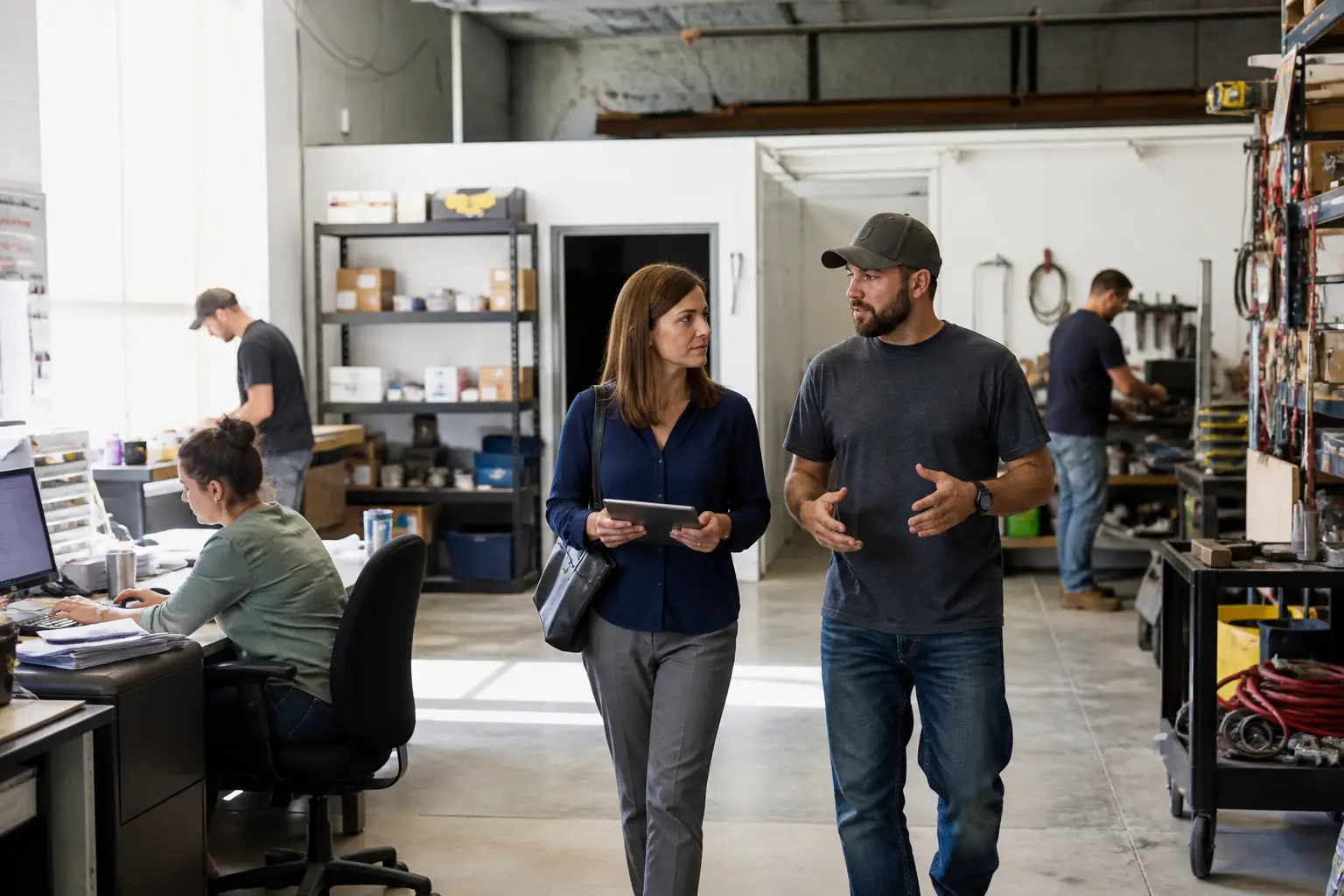
A commercial package can combine the property the business owns, the liability created by its work, and the income that depends on both. Separate policies then connect around that same operating picture.
- 01
Commercial property
Protects scheduled buildings, improvements, inventory, equipment, furniture, and other business property against covered causes of loss.
- 02
General liability
Addresses covered bodily injury, property damage, and certain personal or advertising injury claims arising from premises and operations.
- 03
Business income
Can replace covered income and continuing expenses when insured property damage interrupts the operation.
- 04
Inland marine
Can protect tools, mobile equipment, property in transit, installation work, and other property that does not stay at one address.
- 05
Equipment breakdown
Can cover qualifying mechanical, electrical, and pressure-system failures that ordinary property coverage may not address.
- 06
Coordinated policies
Commercial auto, workers compensation, cyber, professional liability, and umbrella can be structured around the same operating picture.
Where programs differ
Coverage should follow the operation
The business name is not enough. Locations, mobile property, completed work, contracts, revenue, employees, and ownership all change how the program should be structured.
Six places where an insurance program can drift away from the business it covers.
- 01
A real property schedule
Buildings, tenant improvements, equipment, inventory, and property away from the premises each need accurate values and locations.
- 02
Operations and completed work
What the business does today and what can go wrong after the work is finished both shape the liability program.
- 03
Business-income assumptions
Revenue, continuing expenses, seasonality, payroll, and recovery time determine whether an interruption limit is realistic.
- 04
Contract requirements
Leases and customer agreements can require limits, additional insured status, waivers, and other terms that the policies must support.
- 05
Property that moves
Tools, equipment, installation materials, customer property, and inventory in transit often sit outside a building-focused policy.
- 06
Policies that must connect
Auto, workers compensation, cyber, professional liability, and umbrella should use consistent names, operations, and ownership details.
Common commercial package questions
What is a commercial package policy?
A commercial package combines two or more business coverages, commonly property and general liability, under one coordinated policy. It offers more flexibility than a standard BOP for businesses with larger, specialized, or more complex operations. Other policies may still be written separately and coordinated with it.
How is a commercial package different from a BOP?
A BOP is a standardized package designed for eligible small and midsize businesses. A commercial package is more flexible and can handle broader operations, higher property values, multiple locations, or specialized endorsements. The better structure depends on the company, not a preference for one policy name.
Can one program cover several business locations?
Yes, a commercial package can schedule multiple buildings, leased spaces, and operating locations. Each location still needs accurate construction, occupancy, values, protections, and income information. Shared limits can create efficiencies, but they should be tested against a loss affecting more than one part of the business.
Does a commercial package include every business exposure?
No. Commercial auto, workers compensation, professional liability, cyber, employment practices, management liability, and umbrella may require separate policies. The package is the property-and-liability center of the program, not a promise that every exposure is included. We map the gaps around it deliberately.
Build one view of the whole operation.
We will map the property, work, contracts, revenue, vehicles, and employees, then compare a program that connects them without pretending one policy does everything.